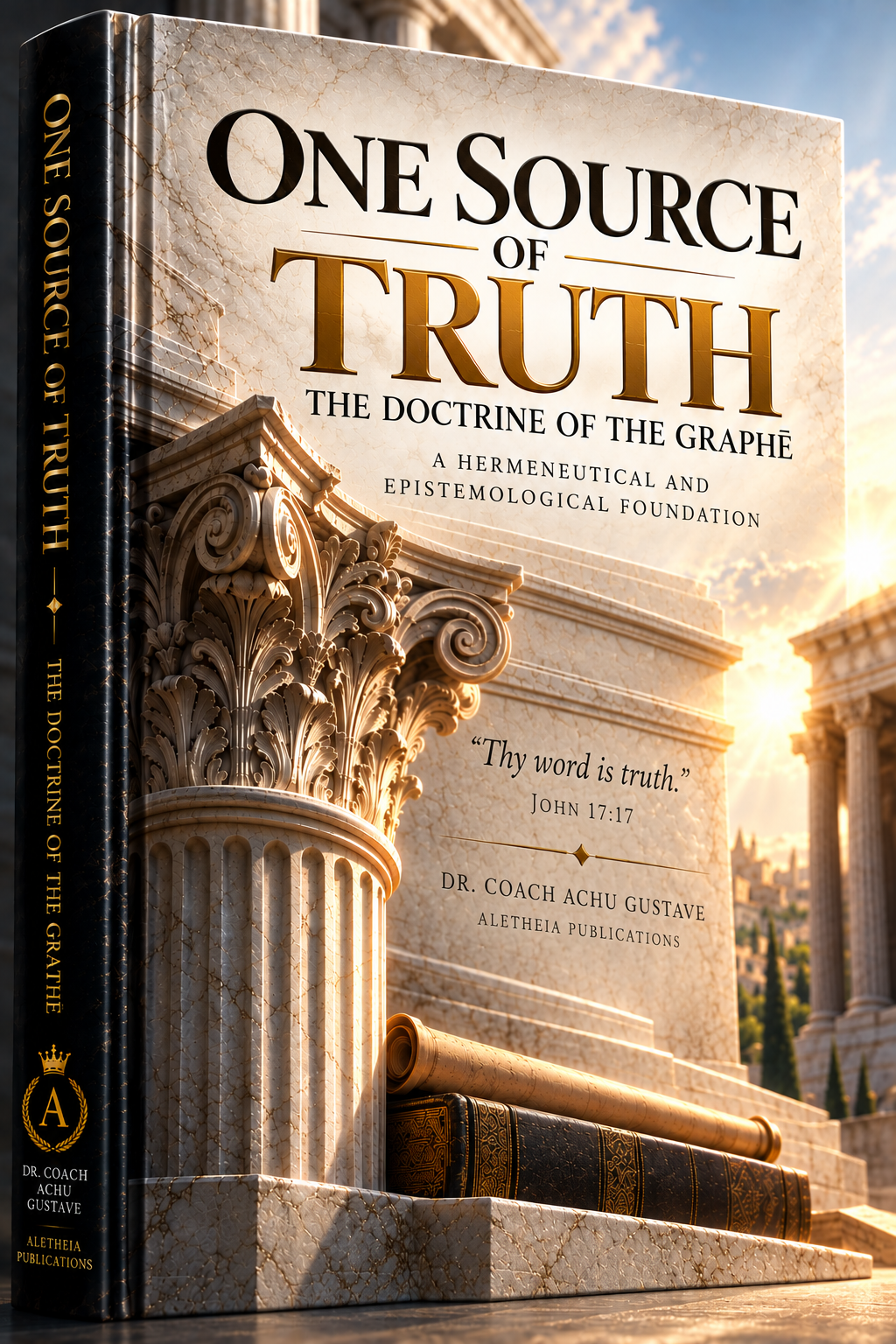
 Gate
Foundation School · Entrance gate
One Source of Truth
The Doctrine of the Graphē · Word drill course
Sixteen Word-drill lessons on γραφή (graphē), Holy Writ as the written authority for truth. The course opens Hebrews 5: ἄπειρος (apeiros), the unskilled; νήπιος (nēpios), the babe; and σπουδάζω (spoudazō), diligent labour in the Word. The course is a pedagogical pathway through the complete 85-chapter Work. It serves the Graphē; it does not replace the Work, and it is not a seventh first principle.
1. Movement I — Truth and the possibility of knowledge
Read the opening investigation as an argument: truth, reality, knowledge, evidence, reasoning, sound judgment, reasonability, and ultimate authority. Reference: Chapters 1–8.
- 1. Truth before conclusionYou do not have permission to view this.
- 2. Knowledge, evidence, and rational warrantYou do not have permission to view this.
- 3. Reasonability and ultimate authorityYou do not have permission to view this.
2. Movements II–III — God, revelation, Bible, Graphē
Trace the argument from the ground of truth through God, revelation, the Bible as written record, and γραφή (graphē). Reference: Chapters 9–22.
- 4. God, truth, and revelationYou do not have permission to view this.
- 5. What kind of record is the Bible?You do not have permission to view this.
- 6. Graphē, Holy Writ, and ScriptureYou do not have permission to view this.
3. Movements IV–V — Revelation and authentication
Follow how divine communication reaches written testimony and how the biblical claim is authenticated through evidence, witness, prophecy, coherence, transmission, and cumulative warrant. Reference: Chapters 23–42.
- 7. How revelation reaches written testimonyYou do not have permission to view this.
- 8. Authentication: evidence to warrantYou do not have permission to view this.
4. Movements VI–VIII — Christ, Scripture, canon, and the verdict of the Graphē
Examine Christ, apostolic testimony, canon, inspiration, infallibility, John 10:34–36, and the conclusion that the Graphē is the primary written authority. Reference: Chapters 43–65.
- 9. Christ as historical and apostolic witnessYou do not have permission to view this.
- 10. Christ, Scripture, and apostolic authorityYou do not have permission to view this.
- 11. Canon, inspiration, and infallibilityYou do not have permission to view this.
- 12. The scripture cannot be brokenYou do not have permission to view this.
5. Movements IX–X — Mishandling, scholarly labour, and the Gate
Distinguish text from interpretation, diagnose doctrinal turning aside and unskillfulness, then develop scholarly labour and readiness for the Six First Principles. Reference: Chapters 66–85.
- 13. Text, interpretation, and secondary authoritiesYou do not have permission to view this.
- 14. Turning aside, accepted heresies, and unskillfulnessYou do not have permission to view this.
- 15. Scholarly labour: from perception to rightly dividingYou do not have permission to view this.
- 16. Capstone — Graphē as Gate, not seventh principleYou do not have permission to view this.
You do not have permission to view this.
This title is closed until this account holds the entitlement.